
Long read · 5 min
The science of sitting
Sitting feels passive. It isn't. The eight or nine hours you spend at a desk each day quietly reshape the tissues that hold you upright — your discs, your hip flexors, the deep stabilizers around your spine. The damage rarely arrives as a single injury. It arrives as a slow drift, and most people only notice it after a decade.
What a disc actually is
Between every two vertebrae sits a small, water-rich cushion called an intervertebral disc. Each disc has a tough outer ring and a gel-like center. Discs don't have their own blood supply — they're fed by movement. Compression squeezes fluid out; release draws it back in, along with oxygen and nutrients. Walking, standing, shifting weight: all of it is how a disc eats.
Sit still for an hour and the discs stay compressed the entire time. Repeat that for years and the cushions slowly lose hydration, height, and resilience. This is part of why people quietly lose a centimeter or two of height in middle age, and why disc issues cluster in seated populations.
The slouch problem
When you slump forward at a desk, the load on your lumbar discs roughly doubles compared with standing — classic biomechanics work by Nachemson found seated, leaning postures place far more pressure on the lower spine than walking does. The pressure isn't evenly distributed either. It concentrates at the front of the disc, gradually pushing the soft inner core toward the back, where the nerves are.
That's the mechanism behind most "I just bent down and my back went" stories. The bending didn't cause the injury. Years of seated load did. The bend was the last millimeter.
What gets short, what gets weak
Tissue follows the shape you keep it in. Sit for eight hours and your hip flexors shorten, your glutes switch off, and your upper back rounds while the chest tightens. The deep stabilizers along the spine — the multifidus and transverse abdominis — forget how to fire because the chair is doing their job.
Stand up after a long meeting and the body is briefly stuck in the shape of the chair. That's the stiffness people feel in their 30s and the chronic ache they feel in their 50s. It isn't aging. It's adaptation.
The fix is small and constant, not big and occasional
A weekend hike won't undo a workweek of compression. What actually protects the spine is the opposite: tiny, frequent interruptions to the seated position. The discs rehydrate in minutes of movement, not hours. The muscles re-engage the moment they have to hold you up.
The smallest changes with the highest return:
- Stand up every 30 minutes. Even 60 seconds of walking restores disc height and resets shoulder posture.
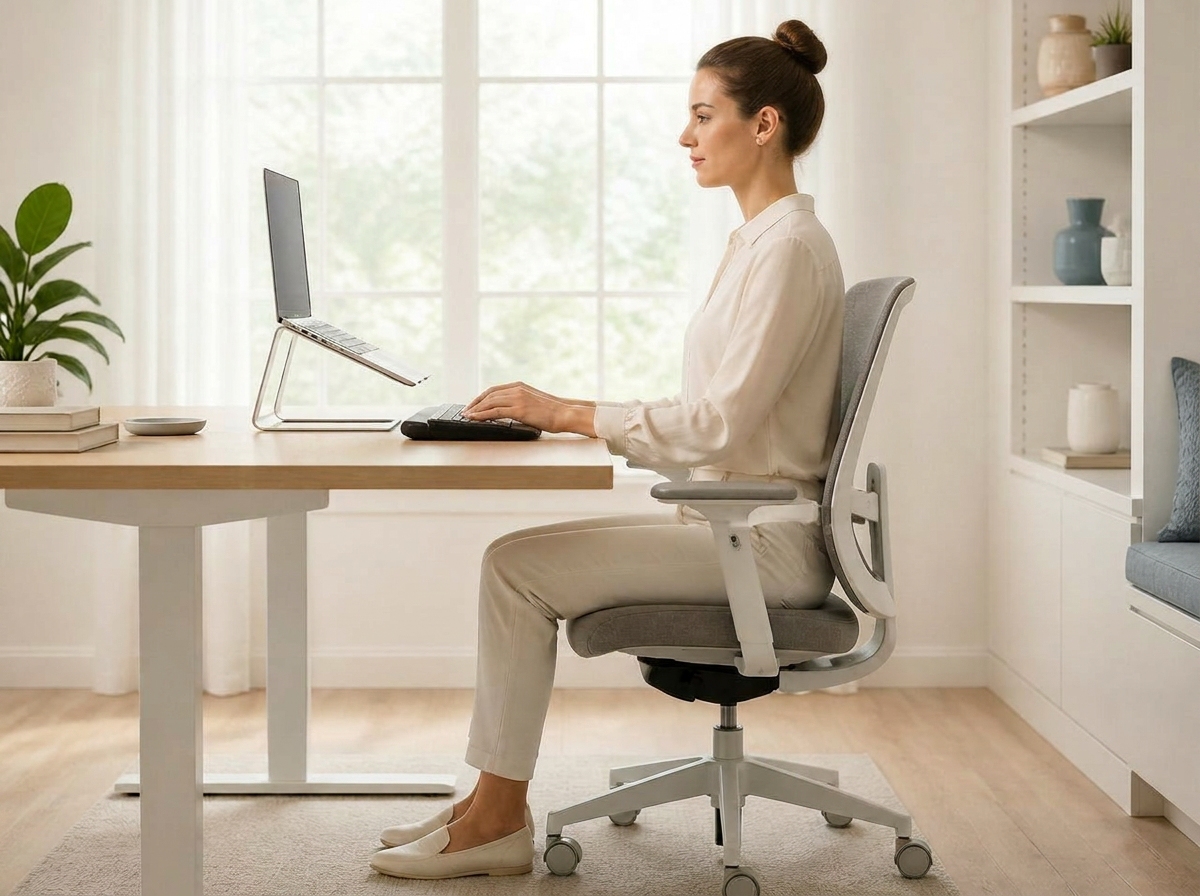
- Set the screen to eye level. A laptop on the desk forces the head forward — every inch of forward-head posture adds roughly 10 lbs of load on the neck.
- Sit back, not perched. Use the chair's lumbar support and recline slightly to ~100–110°, rather than hunching forward over the desk.
- Decompress at night. A few minutes of gentle lumbar extension or a back stretcher reverses the day's flexion and lets the discs draw fluid back in before sleep.
The takeaway
Sitting isn't the new smoking — that's a tidy headline, not biology. But sitting still for hours absolutely changes the spine over time. The intervention isn't a perfect chair or a perfect posture. It's interrupting the stillness, often and gently, every day you sit down to work.
Tools that help
None of these replace movement — but they make the right position the default one, which is what actually changes habits.
- A laptop stand — lifts the screen to eye level so the neck stops bearing forward-head load.
- A back stretcher — a few minutes of gentle extension reverses the day's flexion through the lumbar spine.
- A memory foam wrist rest — keeps the shoulders relaxed and the wrists neutral while you type.